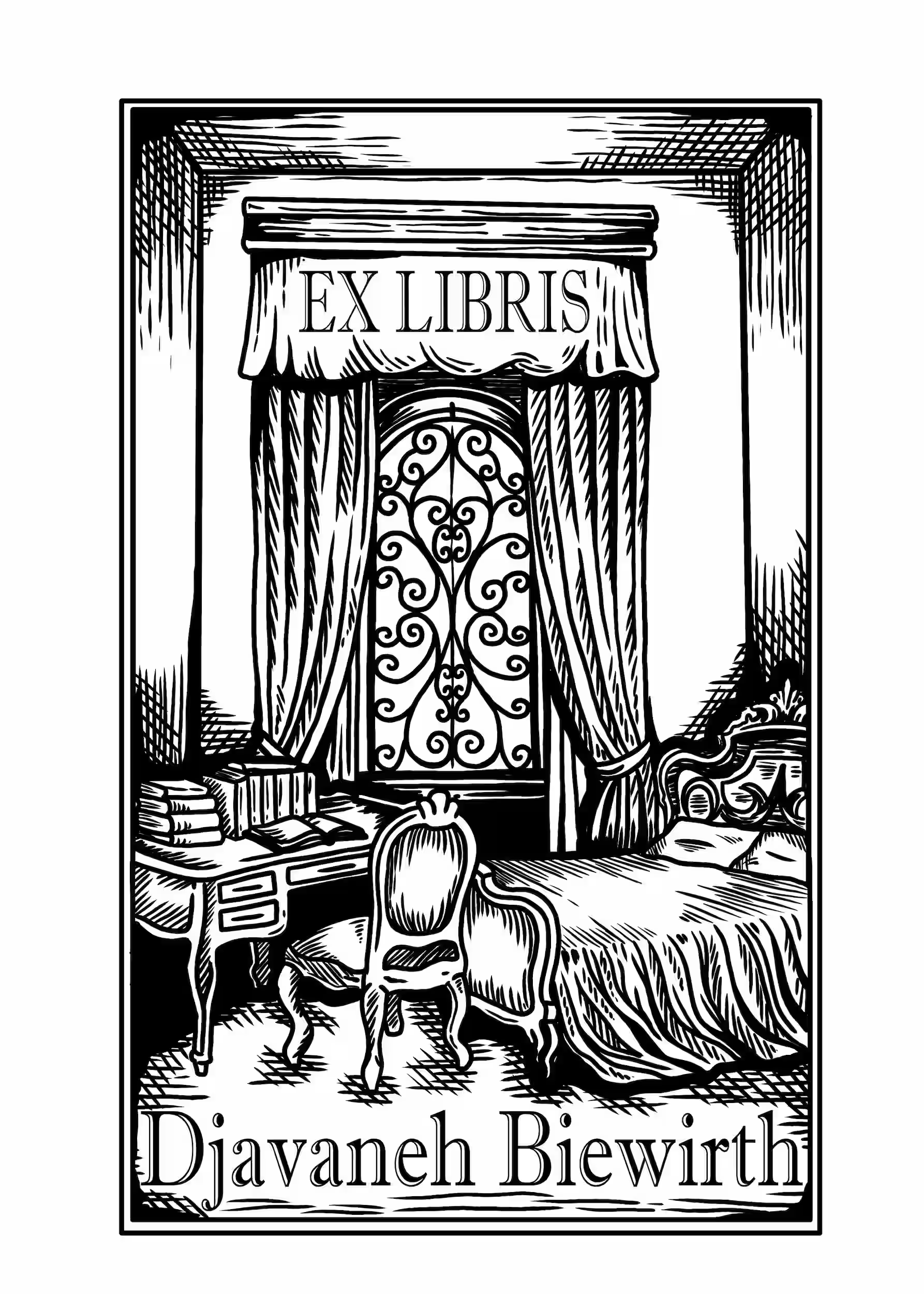
Printable Bookplates - How to Print, Design & Place Them

There is something satisfying about finishing a beautiful bookplate and printing it yourself.
A few minutes later, it's inside your favorite novel.
No waiting. No special equipment. No complicated process.
Just a small piece of paper that quietly says,
"This book belongs in my library."
Printable bookplates have become one of the easiest ways to personalize a collection, whether you download a ready-made template or print artwork created just for you.
The best part? They're surprisingly versatile.
A printable design can later become a sticker, a rubber stamp, or even the starting point for an embosser.
If you're thinking about printing your own bookplates, here's everything worth knowing before you begin.
What Are Printable Bookplates?
A printable bookplate is a bookplate designed to be printed on paper rather than used as a stamp, embosser, or other physical format.
It's a small design created to be printed, cut out, and attached inside a book.
Traditionally, bookplates are placed on the front endpaper, where they're easy to see without covering any printed text.
Some are simple labels with a name.
Others are detailed illustrations that feel like miniature works of art.
Both are printable.
The difference isn't the format. It's the design.
Why Printable Bookplates Are Still So Popular
People sometimes assume printed labels have become old-fashioned.
I don't think that's true.
If anything, they've become more practical.
You don't need expensive equipment.
You don't need to carve a stamp.
You don't need to wait for custom manufacturing.
Once you have the artwork, printing additional copies is quick and inexpensive.
That's especially useful if your library keeps growing.
Print another sheet. Cut out a few more bookplates.
Keep reading.
Sometimes the simplest solution really is the one you'll enjoy using most.
Printable Bookplates and Bookplate Templates
One misconception I see quite often is that printable automatically means template.
It doesn't. A printable bookplate is simply a format.
The artwork itself can be completely original.
Many collectors commission a custom illustration and then receive a high-resolution printable version they can use for years.
Others prefer downloadable templates.
Both are printable. Only one is unique.
That's an important distinction.
A printable bookplate describes how it's used, not how it was created.
What to Look for in a Bookplate Template
A good bookplate template should leave enough room for the name or wording you want to add without making the design feel crowded.
Look for a layout that works at the final size you plan to print.
Fine decorative details can look beautiful on a large screen but disappear when the design is reduced.
It's also worth checking whether the template is designed for the type of printing you plan to use.
A simple black-and-white design can work beautifully on a home printer, while a more detailed illustration may benefit from professional printing.
Templates are useful when you want a quick starting point.
If you want the artwork itself to reflect your family, interests, or personal library, a custom bookplate gives you much more freedom.
Standard Bookplate Size: How Big Should a Bookplate Be?
One question appears again and again.
"How big should a bookplate be?"
There isn't a single correct answer.
The right size depends on the book, the design, and how much detail you want the illustration to contain.
A small bookplate can feel elegant and understated, while a larger one gives an illustrated design more room to breathe.
Most printable bookplates fall somewhere between 2 × 3 inches and 3 × 4 inches.
Smaller designs feel subtle and work well in paperbacks.
Larger illustrations leave more room for decorative details.
Personally, I usually prefer designs that feel balanced rather than oversized.
The illustration should become part of the book, not compete with it.
Where Should You Put a Bookplate?
Traditionally, bookplates are attached to the inside front cover or the front endpaper.
That's still the best location today.
It's easy to find. Easy to admire.
And it keeps the illustration away from the printed pages.
Some people place them elsewhere. There's no rule saying you can't.
But if you enjoy the long history of Ex Libris bookplates, the front of the book remains the classic choice.
Choosing Paper
People often spend hours choosing artwork, and only a few seconds choosing paper.
Ironically, the paper can completely change how the finished bookplate feels.
A thin office sheet works. But it rarely feels special.
A heavier matte paper gives the illustration more presence.
Fine art papers create a softer, richer appearance.
Glossy paper produces brighter colors, although some readers prefer the quieter look of matte finishes.
There isn't one perfect option. Think about the books themselves.
A minimalist modern library may suit crisp white paper.
A collection of antique books often feels more natural with warmer tones and lightly textured stock.
I've also noticed that textured matte papers often make illustrated bookplates feel closer to traditional Ex Libris prints than glossy finishes do.
Adhesive or Glue?
Once you've printed your bookplates, you'll need to attach them to your books.
This is one of those small decisions that doesn't seem important, until years later.
Self-adhesive labels are the easiest option.
They're quick, clean, and perfect if you're adding bookplates to dozens of books at once.
Traditional paper bookplates attached with archival glue feel a little more classic.
Many collectors enjoy the process itself.
Carefully placing each label becomes part of welcoming a new book into the library.
Whatever method you choose, avoid adhesives that become brittle or yellow over time.
A bookplate should age gracefully alongside the books it lives in.
Bookplate Printing: Home Printer or Print Shop?
Both options work well. The ink matters too.
For illustrated bookplates, a good-quality inkjet printer can produce fine lines and small details very well.
If you're printing black-and-white artwork, make sure the printer produces solid blacks without losing the thinner lines in the illustration.
Home printers are convenient and make it easy to print only a few bookplates whenever you need them.
If you already have a good inkjet printer, the results can be excellent.
Professional printing becomes worthwhile if you're producing larger quantities or want premium paper that isn't practical to use at home.
You'll often notice slightly sharper details and more consistent colors.
For most personal libraries, though, a carefully prepared home print is more than enough.
Preparing Bookplates for Printing
Before you print bookplates, check three things: the final size, the margins, and the artwork resolution.
Your design should be created at the size you actually plan to use. Leave enough space around the edges so nothing important gets too close to the cut line.
If the bookplate includes a name, Ex Libris text, or other small details, check them at actual size rather than relying on how they look on screen.
It's also worth printing one copy before printing an entire sheet. A quick test can reveal details that disappear, text that feels too small, or margins that need adjusting.
Once the test looks right, you can arrange several bookplates on one sheet and print them together.
Should You Laminate a Bookplate?
People occasionally ask this question. Personally, I wouldn't.
Laminated bookplates feel more like identification cards than part of a book.
Traditional bookplates become integrated into the library.
They sit quietly on the page.
You almost stop noticing them until you open another book and see the same familiar design again.
That subtle feeling is part of their charm.
Designing for Print
One thing I've learned is that almost every design looks slightly different once it leaves the screen.
That's why I always like seeing a bookplate printed at its actual size before calling the illustration finished.
Tiny adjustments often make a surprisingly big difference.
Something can look wonderful on a computer screen and still disappoint once it's printed.
Bookplates are small. Very small.
Tiny decorative details often disappear.
Thin lines become difficult to see.
Text that looked perfectly readable on your monitor suddenly feels cramped.
That's why print should always be considered during the design process.
Whether you're creating your own artwork or working with an illustrator, it's worth viewing the design at its actual printed size before calling it finished.
You'll notice things that aren't obvious on a large screen.
How to Make Bookplates to Print
Making a bookplate to print doesn't have to be complicated.
Start with the size you want to use, then create the artwork at that final size rather than designing it much larger and hoping it works when reduced.
This makes it easier to see whether small details and text will still be readable.
If you're using a template, leave enough space for the name or wording you want to add.
If you're creating an original design, think about how the illustration will look once it's printed and placed inside the book.
Before printing a full sheet, always make one test print at actual size.
That's the easiest way to catch problems with tiny text, thin lines, margins, or details that disappear when printed.
Once you're happy with the result, you can print multiple bookplates on the same sheet and cut them out individually.
Printable Doesn't Mean Temporary
I think this is one of the biggest misconceptions surrounding printable bookplates.
People sometimes imagine they're only a budget option.
Or something you use until you can afford something better.
That's rarely true.
Many beautifully illustrated Ex Libris designs spend their entire lives as printed bookplates.
The artwork is original. The paper is carefully chosen.
The print quality is excellent.
The only difference is how the artwork reaches the inside of the book.
A printable format doesn't make an illustration less personal.
It simply makes it easier to use.
Who Are Printable Bookplates Best For?
Printable bookplates are a wonderful choice if you:
- enjoy adding labels yourself
- have a growing personal library
- want the flexibility to print more whenever you need them
- appreciate traditional Ex Libris labels
- would like custom artwork without ordering a stamp or embosser
They're also perfect if you enjoy giving books as gifts.
Printing one extra bookplate takes only a few moments.
Yet it adds a thoughtful personal touch that people often remember long after they've finished reading.
Frequently Asked Questions
Can I print bookplates at home?
Yes. Most printable bookplates are designed to work well with standard home printers. Using good-quality paper usually makes a much bigger difference than owning an expensive printer.
How do I make bookplates to print?**
You can create a bookplate from a template or design original artwork specifically for your library. Set the artwork to its final print size, make sure the text and details are readable, and print one test copy before printing a full sheet.
What paper is best for printable bookplates?
Heavier matte paper is a popular choice because it feels durable and reduces glare. Fine art paper and textured papers also work beautifully for more traditional designs.
Where should I place a printable bookplate?
The traditional location is the inside front cover or the front endpaper. This keeps the illustration visible while protecting the printed pages.
Can printable bookplates be turned into stickers?
Absolutely. Many people print their designs on self-adhesive label paper, making them quick and easy to apply.
Are printable bookplates only for templates?
Not at all. A printable bookplate can be a downloaded template or a completely original illustration created specifically for one person.
Related Guides
If you're still exploring different ways to personalize your library, these articles may help:
-
What Is a Bookplate explains what bookplates are, where they came from, and how they are used.
-
DIY vs Custom Ex Libris compares templates, AI, generators, and custom illustration.
-
How to Choose Symbols for Your Bookplate will help you discover ideas that feel personal.
-
Bookplate Examples showcases different artistic styles and sources of inspiration.
One of my favorite moments is seeing a finished illustration finally become part of someone's bookshelf.
It stops being a digital drawing and starts living inside the books it was created for.
And if you'd like a custom bookplate illustration created specifically for your own library, you can learn more about my Custom Ex Libris Bookplate Illustration process.
Every design is hand drawn and delivered in high-resolution formats ready for printing, stamps, or embossers.