Bookplate Examples - Ideas and Inspiration for Your Own Library

When someone asks me to create a custom bookplate, the conversation almost always begins the same way.
"Can I see some examples first?"
Of course.
Not because I expect someone to copy an existing design.
Quite the opposite.
Examples aren't there to be recreated.
They're there to help you discover what feels right.
Maybe you're drawn to quiet woodland scenes.
Maybe you love old engraved Ex Libris designs.
Or perhaps you prefer something clean and modern with just one meaningful symbol.
Looking through different bookplate examples helps you understand your own taste before a single sketch is made.
That's exactly what this guide is for.
There Isn't One "Correct" Bookplate
As you look through the examples below, don't focus on finding the "perfect" design.
Instead, notice which illustrations you keep coming back to.
That's often a better starting point than trying to choose individual symbols or decorative details.
One of the nicest things about bookplates is that they don't belong to a single style.
For hundreds of years, people have created them in completely different ways.
Some are filled with intricate decorative details.
Others consist of nothing more than elegant lettering.
Some tell an entire story inside a tiny illustration.
Others say everything with one carefully chosen object.
The best bookplate isn't the most detailed one.
It's the one that feels like it belongs inside your books.
Nature-Inspired Bookplates
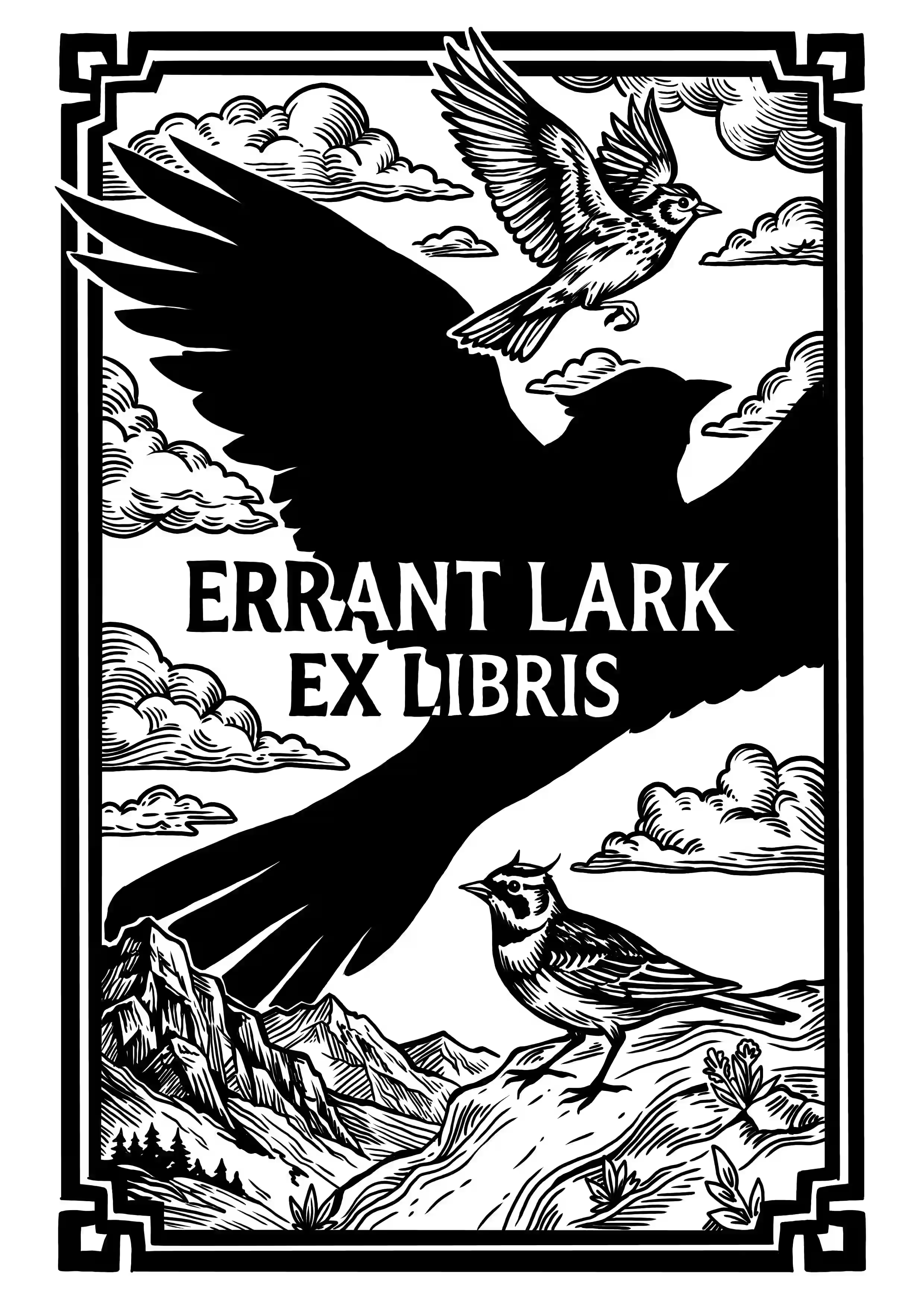
Nature has inspired bookplates for centuries.
Birds.
Foxes.
Trees.
Wildflowers.
Mountains.
Oceans.
These illustrations feel calm and timeless because they connect books with the natural world.
Readers who enjoy slow mornings, long walks, and cozy evenings often find themselves drawn to this style without even realizing why.
The artwork doesn't need dozens of elements.
Sometimes a single owl on an old branch says everything it needs to.
Rather than asking yourself "Do I like owls?", try asking something different.
"Does this illustration feel like the kind of library I'd love to own?"
That's usually a much more helpful question.
Vintage Ex Libris Examples
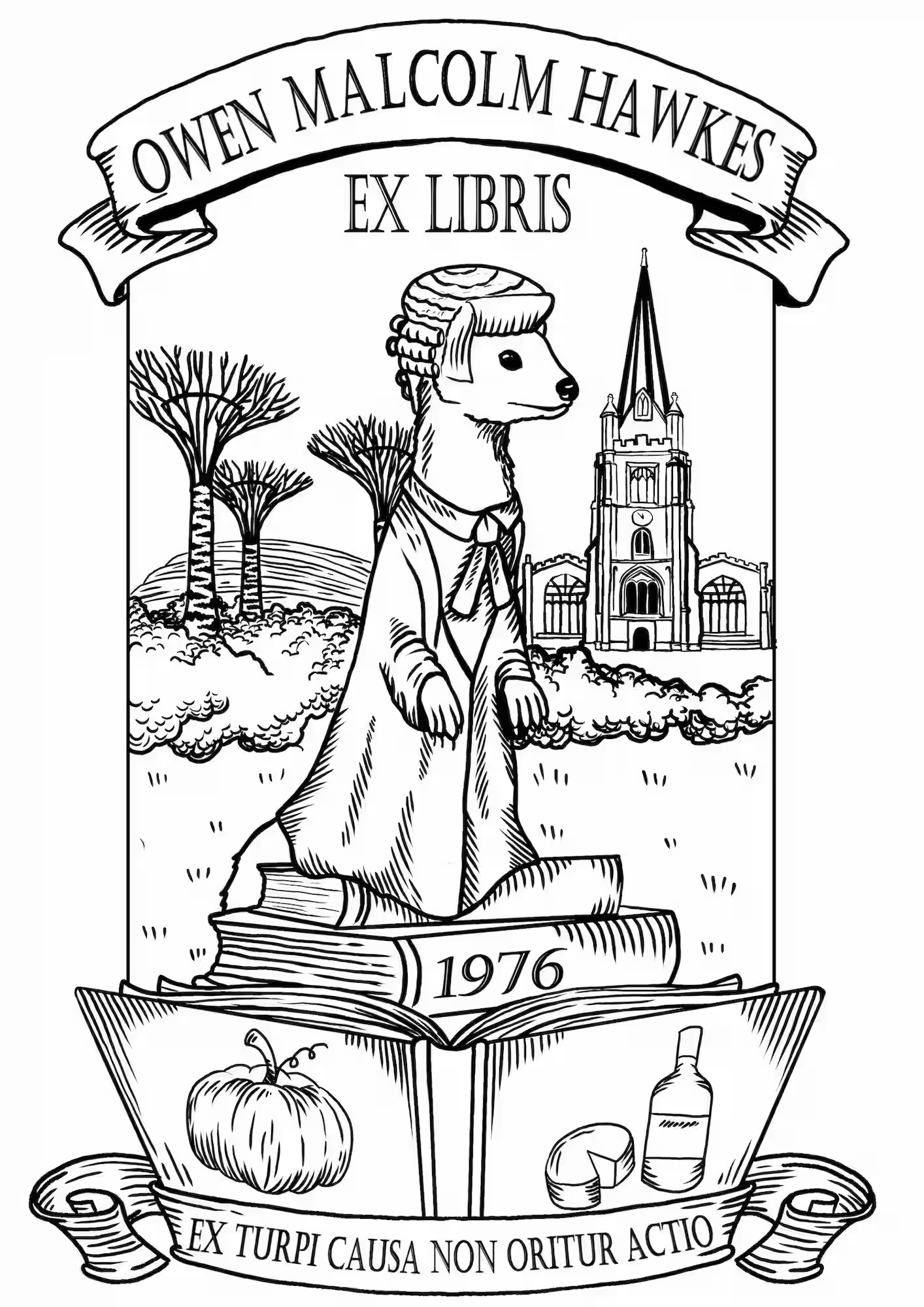
Traditional Ex Libris bookplates have a completely different personality.
Decorative borders.
Detailed line work.
Classical typography.
Illustrations inspired by old engravings.
They immediately feel connected to history.
If you've ever opened an antique book and found an old Ex Libris inside the cover, you already know the feeling.
It's as though the book remembers every person who cared for it before you.
Vintage-inspired bookplates aren't about nostalgia alone.
They're about creating something that feels as though it could still look beautiful a hundred years from now.
If you enjoy classic libraries, old maps, leather-bound books, or historical illustration, this style is often a wonderful place to begin.
Minimalist Bookplates
Not everyone wants an elaborate illustration.
Some readers prefer simplicity.
A single branch.
A tiny bird.
Elegant typography.
Plenty of white space.
Minimalist bookplates prove that personality doesn't come from adding more details.
It comes from choosing the right ones.
This style works especially well for modern libraries where clean design already plays an important role.

Simple doesn't mean empty.
When every element has a purpose, even the smallest illustration can feel incredibly personal.
Storytelling Bookplates
These are probably my favorite examples.
Instead of focusing on one symbol, they capture a tiny moment.
A child reading beneath an old oak tree.
A lighthouse glowing beside the sea.
A fox carrying a lantern through the woods.
A cottage surrounded by shelves of books.
These illustrations invite curiosity.
People don't simply notice them.
They pause.
They wonder.
They imagine the story continuing beyond the edge of the page.
These are often the illustrations people remember longest.
Not because they're more detailed.
Because they make you feel as though you've stepped into the first page of a favorite book.
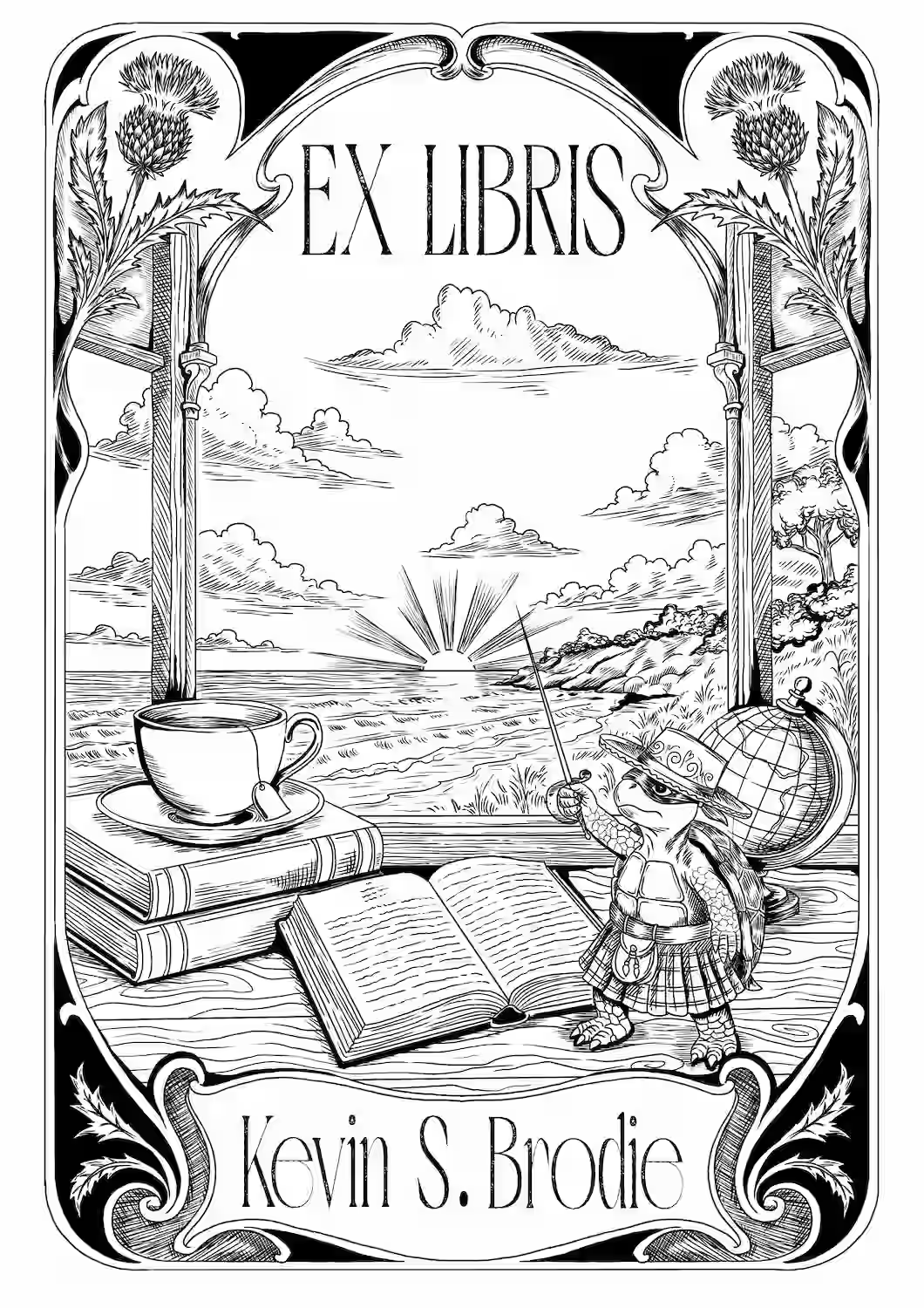
To me, these feel less like labels and more like miniature picture books.
Animal Bookplates
Animals appear in bookplates more often than almost any other subject.
Not because every animal has a fixed symbolic meaning.
Because people naturally connect with them.
Some readers love ravens.
Others can't imagine a better companion than a sleepy cat curled up beside a stack of novels.
Someone else immediately thinks of horses, foxes, rabbits, whales, or butterflies.
The interesting part is that the same animal can inspire completely different illustrations.
A raven in a gothic composition feels very different from a raven perched quietly on a winter branch.
That's why the overall atmosphere matters just as much as the subject itself.
Botanical Bookplates
Flowers and plants create some of the softest, most timeless bookplate designs.
Wildflowers.
Fern leaves.
Oak branches.
Olive trees.
Climbing ivy.
Some illustrations feel delicate.
Others become richly decorative.
Botanical bookplates are often chosen by readers who want something elegant without feeling overly formal.
Nature quietly frames the owner's name instead of competing with it.
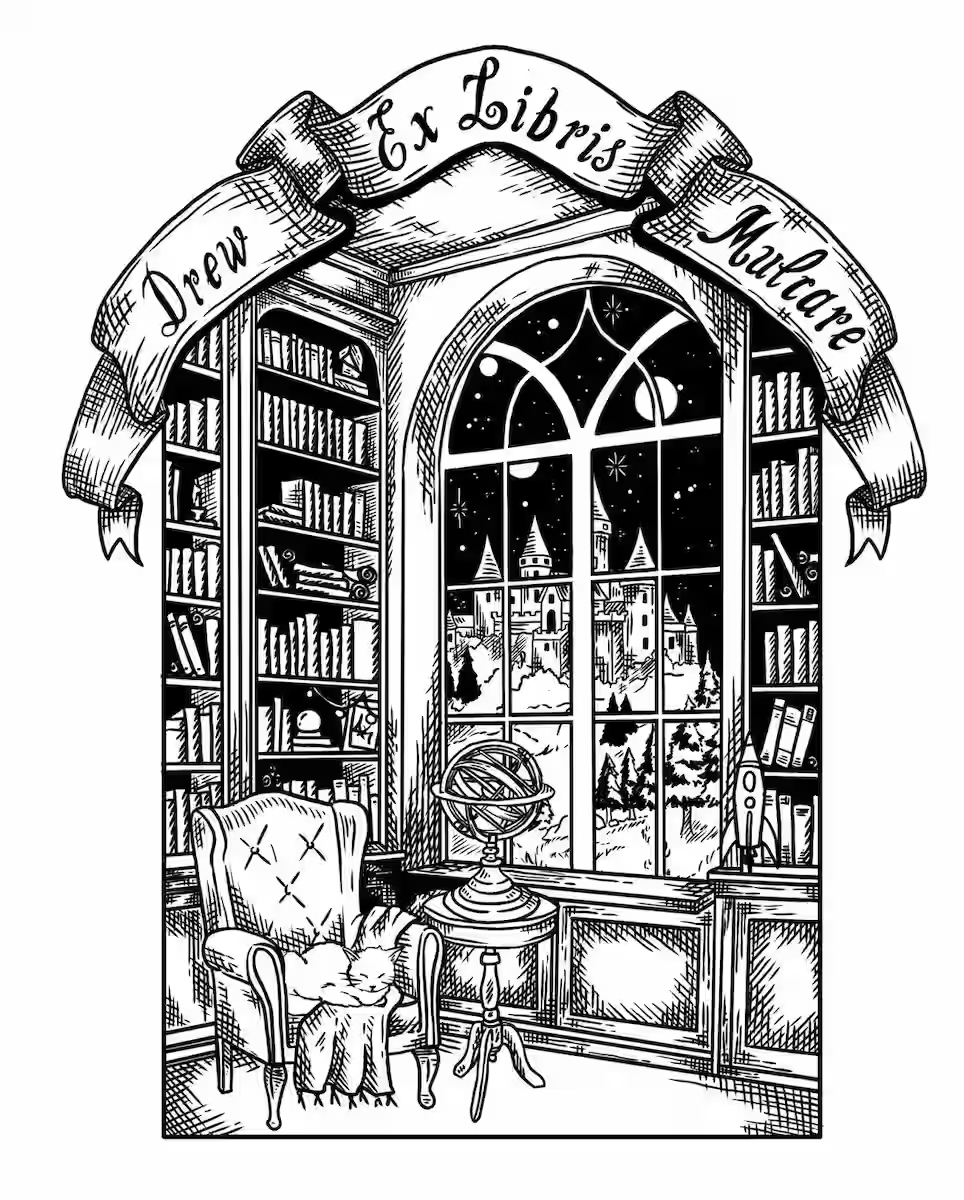
Fantasy Bookplates
Fantasy readers often ask for illustrations that feel like stepping into another world.
Ancient forests.
Dragons.
Castles.
Magical libraries.
Celestial skies.
Rather than illustrating a specific novel, these bookplates usually capture the feeling of fantasy itself.
Wonder.
Adventure.
Discovery.
They're perfect for readers who never quite stopped believing that another world might exist just beyond the next page.
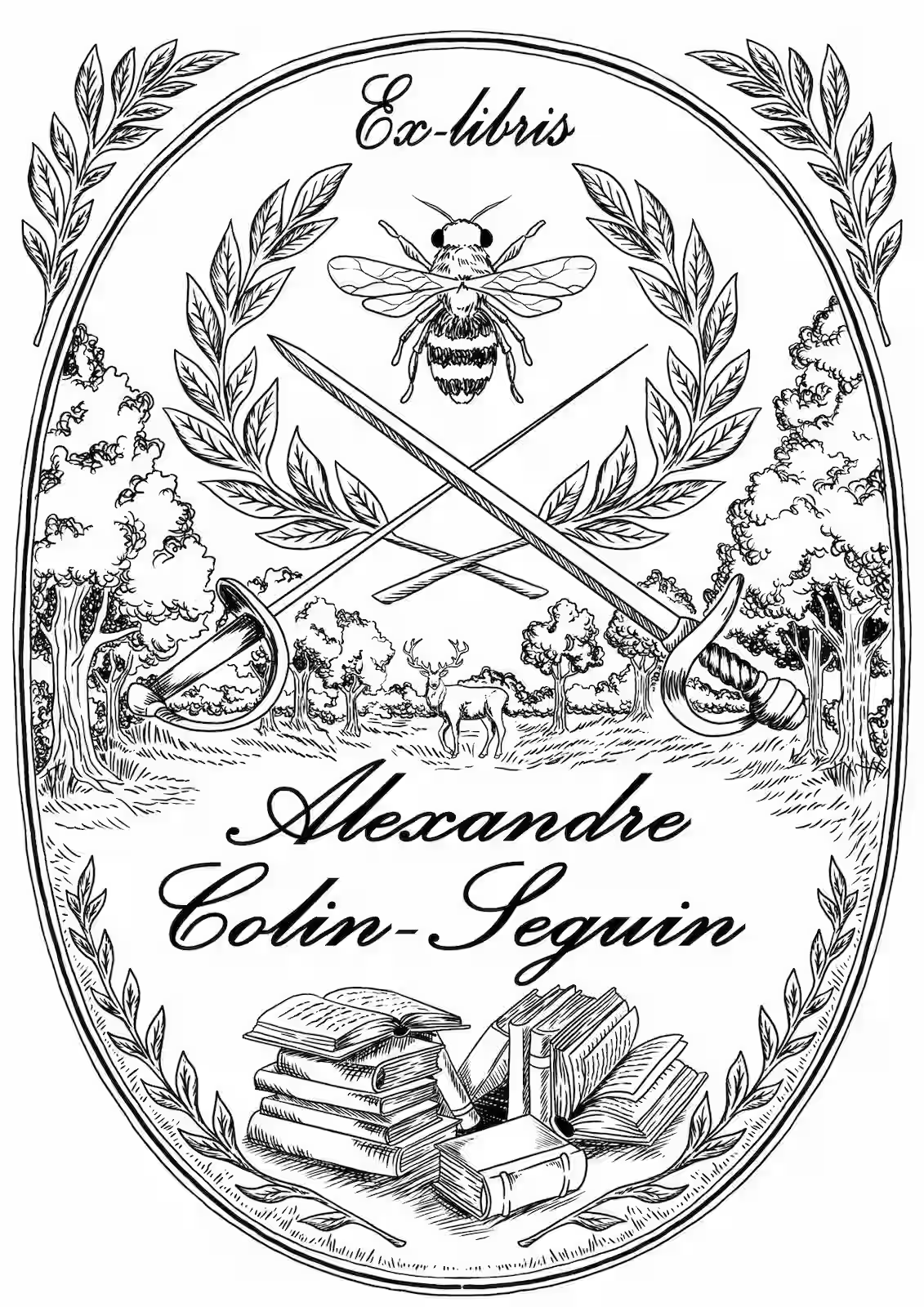
Literary and Academic Styles
Some readers prefer artwork inspired by literature itself.
Open books.
Old libraries.
Writing desks.
Quills.
Stacks of worn novels.
This style celebrates reading without referencing any particular story.
It's especially popular among teachers, writers, professors, librarians, and lifelong collectors.
The illustration becomes a quiet tribute to books themselves.
Children's Bookplates
Children's bookplates have a different kind of magic.
They're playful without feeling childish.
The goal isn't to create something that will be outgrown in a few years.
It's to create artwork that grows alongside a young reader.
Friendly woodland animals.
Adventure scenes.
Fairytale-inspired illustrations.
Soft colors.
Gentle movement.
Years later, those same little illustrations become part of childhood memories.
That's something I find incredibly special.
Couple and Family Bookplates
Sometimes a library belongs to more than one person.
Couples often combine two collections into one shared bookshelf.
Families slowly build libraries together over generations.
Bookplates for couples don't need to be twice as complicated.
They simply need to tell a shared story.
Sometimes that's done with two names.
Sometimes with a meaningful place.
Sometimes with two completely different personalities living comfortably inside one illustration.
Those are always enjoyable projects because the artwork becomes part of an evolving family library rather than belonging to just one reader.
Which Style Feels Most Like You?
By now you've probably noticed something.
The examples aren't really about birds.
Or flowers.
Or vintage borders.
They're about atmosphere.
Every bookplate creates a different feeling before the book is even opened.
That's what I encourage people to pay attention to first.
Not,
"Which drawing do I like?"
But,
"Which one feels like home?"
The answer is usually much easier to recognize than to explain.
Inspiration Is Only the Beginning
Looking through bookplate examples is one of the most enjoyable parts of the process.
But it's only the beginning.
The strongest bookplates don't borrow someone else's story.
They reveal your own.
That's why I use examples as conversation starters rather than finished answers.
Every custom illustration grows from there into something that couldn't belong to anyone else.
Frequently Asked Questions
Where can I find bookplate examples?
Museum collections, antique books, illustration portfolios, and contemporary artists all provide wonderful inspiration. Looking at different styles helps you discover what feels most like your own library.
Should I copy a bookplate I like?
It's much better to treat existing bookplates as inspiration rather than something to reproduce. The goal is to create artwork that reflects your own personality and collection.
What is the most popular bookplate style?
There isn't one. Some readers love traditional Ex Libris designs, while others prefer minimalist, botanical, fantasy, or highly illustrated bookplates.
How do I choose the right style?
Think less about individual objects and more about the overall feeling. The style that feels most natural to you is usually the best place to begin.
Related Articles
- Custom Bookplates Learn how original illustrations are created from scratch.
- Custom Bookplate Gift Ideas Discover why custom bookplates make unforgettable gifts.
- Bookplate Symbols and Their Meanings Explore the stories behind common bookplate imagery.
- DIY vs. Custom Ex Libris Bookplates Thinking about creating your own? Compare DIY options with commissioning original artwork.
If these examples have sparked ideas for your own library, you can learn more about my Custom Ex Libris Bookplate Illustration service.