Bookplate Symbols and Their Meanings - What Common Symbols Represent

A bookplate symbol is an image chosen to represent something about the person who owns the book.
In Ex Libris design, common symbols include animals, books, trees, flowers, heraldic elements, and meaningful places.
These symbols can have traditional meanings, but personal meaning matters just as much.
An owl might represent wisdom to one reader and a childhood memory to another.
One of my favorite questions to ask is surprisingly simple.
"Why did you choose that?"
Sometimes the answer comes immediately.
"I've always loved foxes."
"My grandfather kept bees."
"That old oak tree reminds me of home."
Other times, people pause.
They know they want an owl, a lighthouse, or a certain flower, but they aren't completely sure why.
That's one of the reasons I enjoy designing bookplates so much.
The illustration usually begins long before I pick up a pencil.
It begins with discovering which symbols already belong to someone's story.
Bookplate Symbols and Their Meanings
Long before bookplates became highly personal, they already relied on symbolism.
Early Ex Libris designs often featured family crests, mythological figures, animals, botanical decorations, or objects connected to the owner's profession.
If you're new to the tradition itself, What Is Ex Libris explains the history, meaning, and traditional use of Ex Libris bookplates.
Those illustrations weren't chosen simply because they looked beautiful.
They communicated identity.
In a tiny space inside the front cover, they quietly answered a question.
"Whose book is this?"
Today, the question hasn't really changed.
The answer has simply become more personal.
Instead of a family coat of arms, someone might choose the cat that has slept beside every book they've read for the last fifteen years.
Instead of heraldry, they might choose the lighthouse they visit every summer.
The symbols are different.
The purpose is exactly the same.
Don't Worry About Choosing the "Right" Symbol
One of the biggest misconceptions I see is the idea that every symbol has one fixed meaning.
It doesn't.
You can find lists online claiming that an owl always represents wisdom or a fox always represents cleverness.
Those traditions certainly exist.
But personal meaning matters much more.
Imagine two readers choosing the exact same owl.
One chooses it because they studied literature.
Another because they spent every childhood evening listening to owls outside their grandparents' cottage.
The illustration may look similar.
The story behind it couldn't be more different.
That's why I always encourage people to begin with memories instead of symbolism.
The meaning usually follows naturally.
Animal Bookplate Symbols and Their Meanings
Animals have appeared in bookplates for centuries.
Not because they follow strict rules.
Because they communicate personality almost instantly.
Even before we explain why we chose them, they create a feeling.
That's what makes them such powerful visual storytelling tools.
Owl

Few animals appear in bookplates as often as the owl.
Traditionally, owls have been associated with wisdom, learning, and quiet observation.
It's easy to see why readers feel drawn to them.
But that's only part of the story.
What I love about owl illustrations is the atmosphere they create.
They're peaceful.
Patient.
Comfortable with silence.
They don't demand attention.
They simply watch.
For someone who finds happiness in late-night reading, old libraries, or thoughtful conversations, an owl often feels like a natural companion.
Not because it represents wisdom.
Because it feels familiar.
Cat
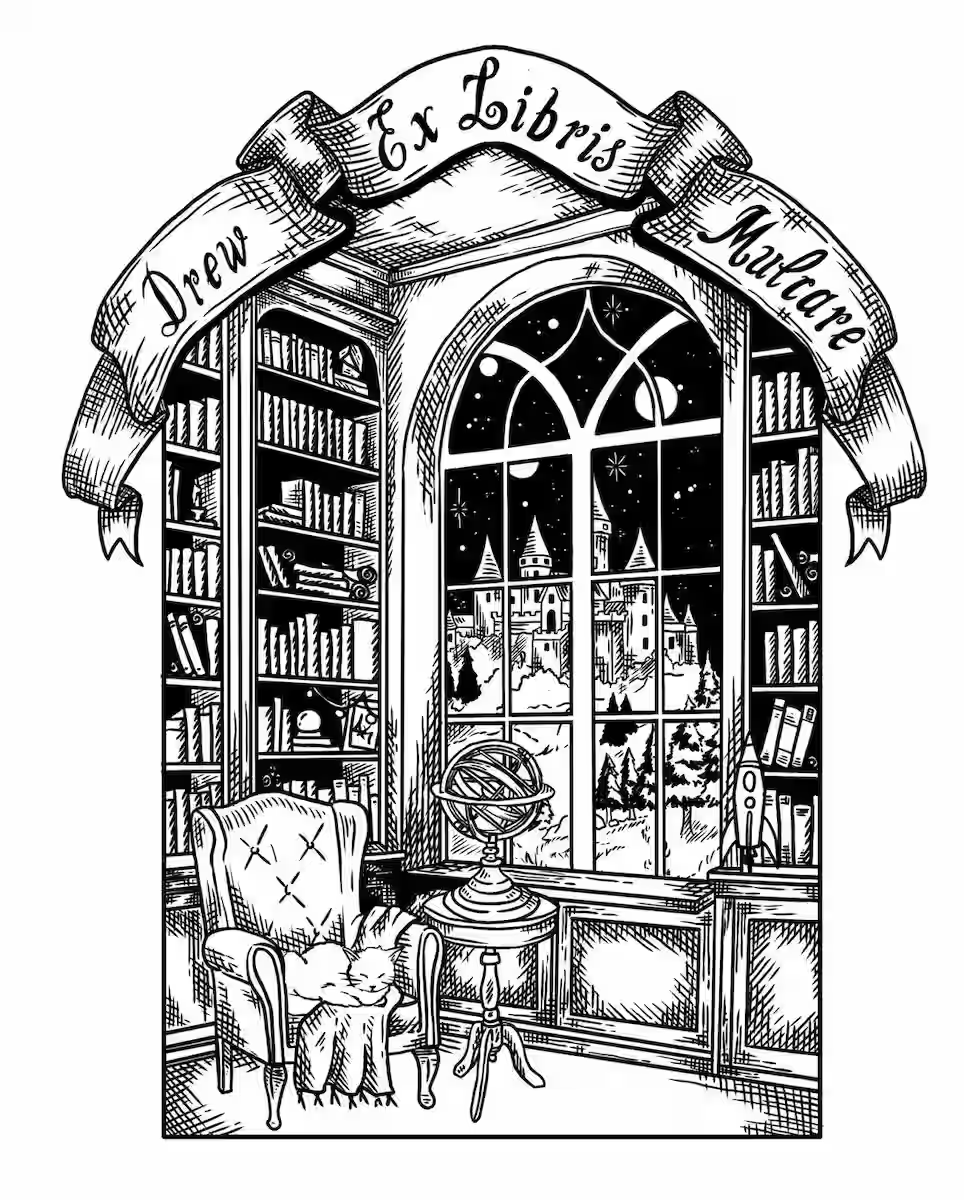
Cats almost seem designed for bookplates.
They've spent centuries appearing in libraries, bookshops, and stories.
Ask almost any reader to imagine a cozy reading corner and there's a good chance a cat quietly appears somewhere in the picture.
People often associate cats with curiosity and independence.
I think they also represent comfort.
The feeling of slowing down.
Finding your favorite chair.
Opening a book you've read before.
Cats fit beautifully into almost any artistic style, whether the illustration is vintage, whimsical, gothic, or completely modern.
That's one reason they remain one of the most popular choices.
Bee
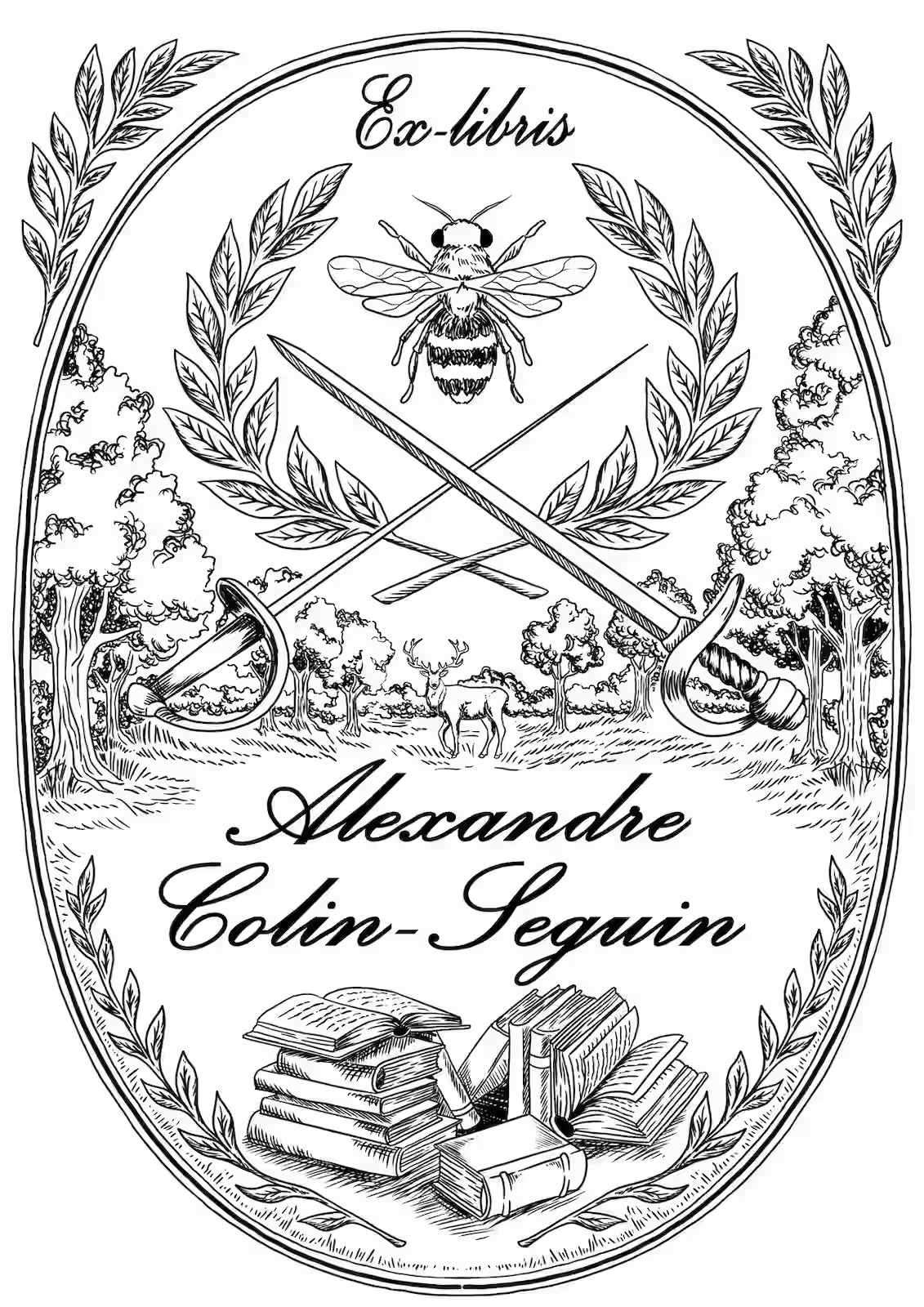
Bees are fascinating because they carry several meanings at once.
Traditionally, they're connected with diligence, creativity, and community.
But visually, they also bring wonderful balance to a composition.
Their shape works beautifully in decorative borders, heraldic layouts, and symmetrical designs.
I've noticed that people who choose bees often enjoy creating as much as reading.
Artists.
Writers.
Gardeners.
Researchers.
People who like building things one careful step at a time.
The symbolism feels earned rather than decorative.
Sheep
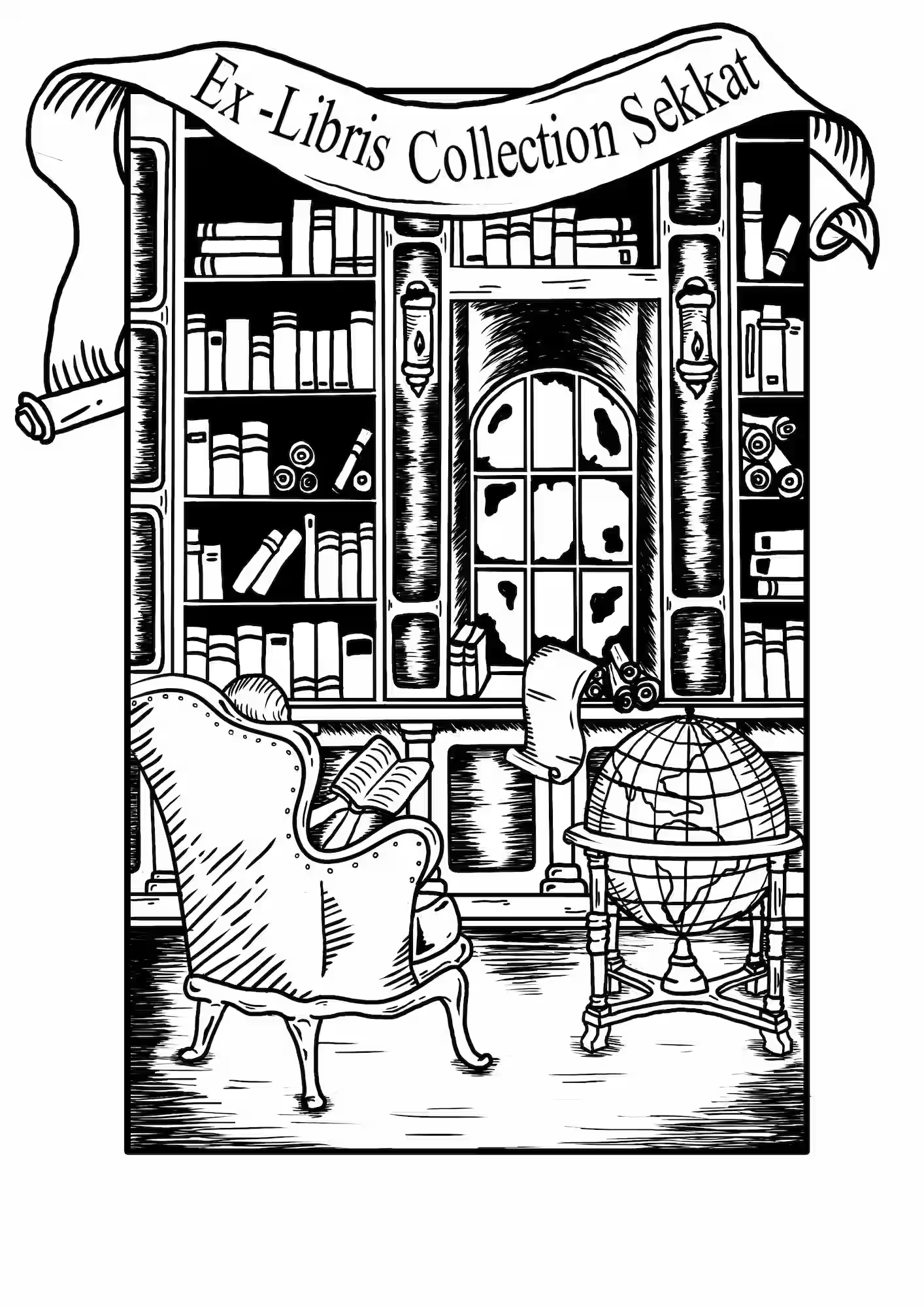
A sheep isn't an animal most people expect to find inside a bookplate.
That's exactly why I like seeing it.
It immediately changes the mood.
Instead of drama, it suggests gentleness.
Instead of adventure, it creates comfort.
A sheep feels perfectly at home beside warm blankets, fireplaces, rainy afternoons, and books that are read slowly rather than quickly.
Not every bookplate needs to make a bold statement.
Some simply need to feel peaceful.
Frog
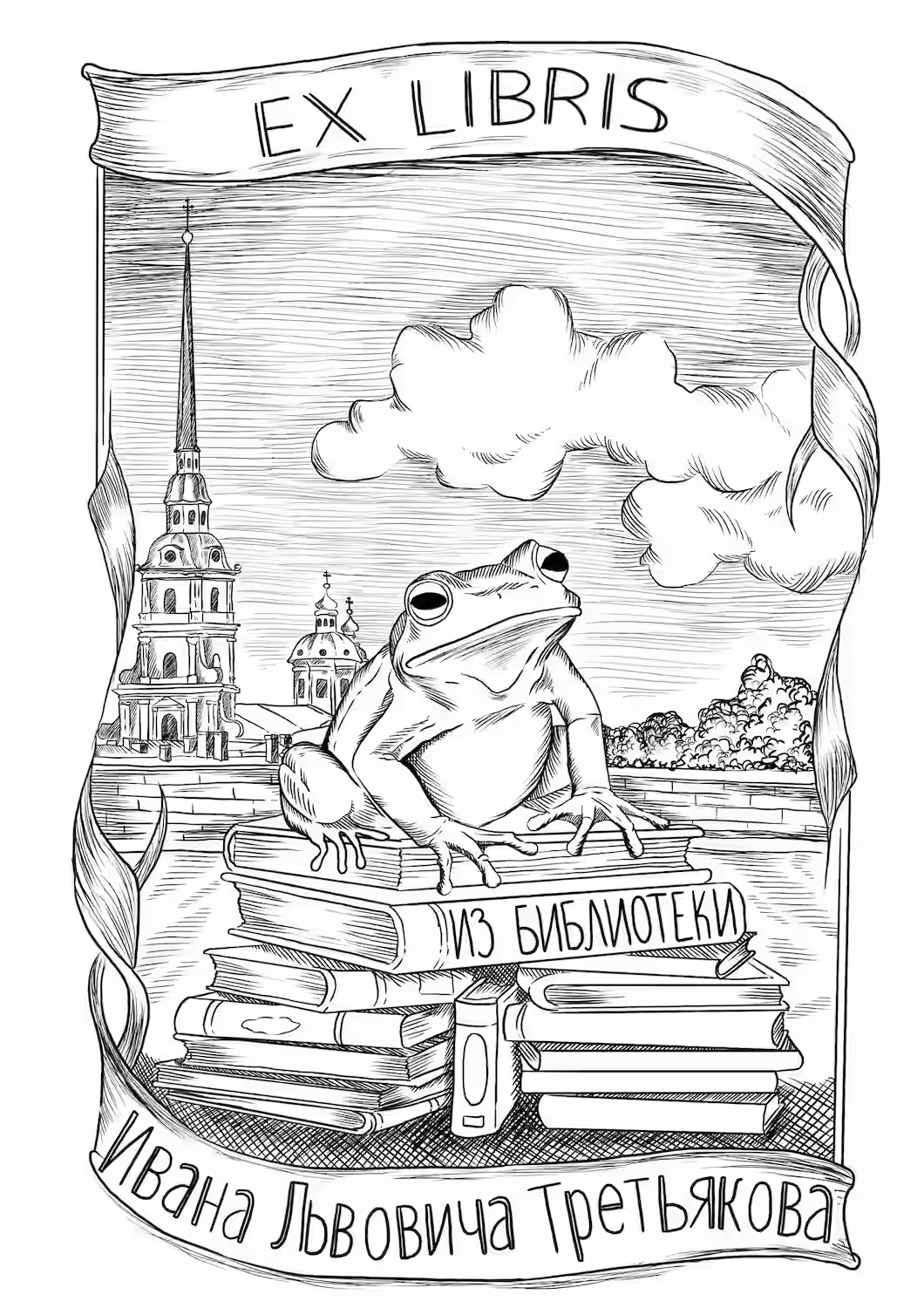
I don't see frogs very often in bookplates.
Maybe that's exactly why they're so memorable.
A frog brings a sense of curiosity and transformation.
It belongs to two worlds at once, moving between water and land with ease, which has made it a symbol of change in stories and folklore for centuries.
But symbolism isn't the only reason someone might choose it.
Sometimes they simply love fairy tales.
Sometimes they grew up catching frogs by a pond every summer.
Sometimes the illustration just makes them smile.
And honestly, that's reason enough.
One of the things I enjoy most about custom work is seeing unexpected choices become unforgettable illustrations.
Botanical Symbols and Their Meanings
Animals aren't the only way to tell a story.
Plants, flowers, and trees often carry just as much emotion while creating a softer, quieter atmosphere.
Unlike animals, botanical elements rarely become the center of attention.
Instead, they gently frame the illustration, giving it rhythm, movement, and balance.
I've noticed that botanical illustrations rarely become someone's favorite because of a particular flower.
They become favorites because of the feeling they create.
Quiet.
Balanced.
Unhurried.
Trees
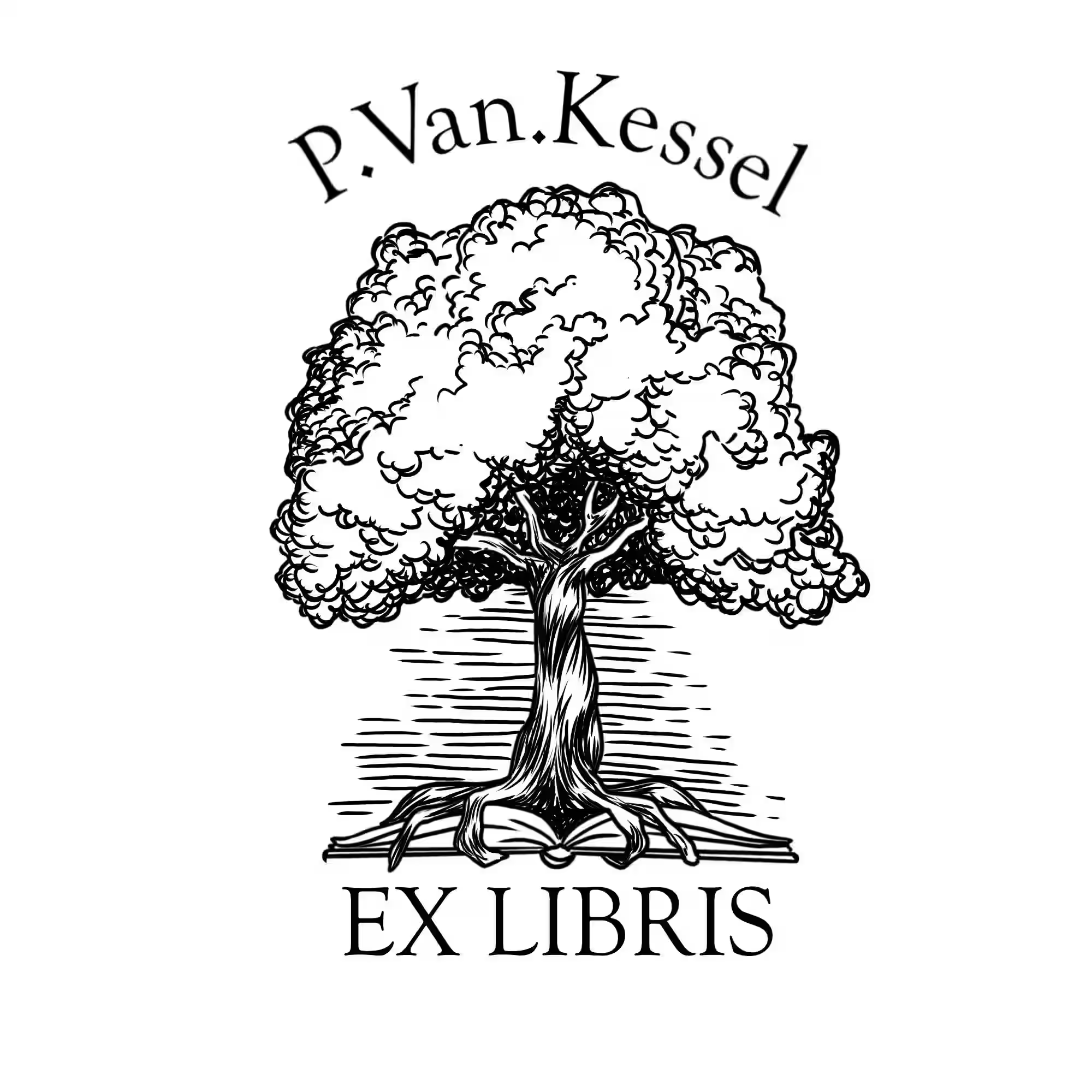
Trees have appeared in bookplates for generations.
It's easy to understand why.
They naturally suggest growth, knowledge, and the passing of time.
Books do much the same.
Some readers are drawn to a mighty oak because it feels strong and enduring.
Others love the graceful movement of a willow or the quiet elegance of an olive tree.
The species itself is often less important than the feeling it creates.
A single tree standing alone can make an illustration feel peaceful.
A dense forest creates mystery.
Visible roots suggest history.
Tall branches reaching upward hint at curiosity and lifelong learning.
The symbolism is there if you want it.
But just like every other element, it becomes far more meaningful when it connects to your own life.
Flowers
Flowers have their own quiet language.
For centuries, people have used them to celebrate love, friendship, remembrance, hope, and new beginnings.
That tradition works beautifully in bookplates too.
Some people choose flowers because they love gardening.
Others because they remind them of a family member.
Sometimes they're chosen simply because they bloom outside a childhood home every spring.
Those personal memories matter far more than any dictionary definition.
A flower doesn't have to symbolize anything universal.
It only needs to mean something to you.
Book and Literary Symbols in Ex Libris Design
Not every bookplate needs an animal or a landscape.
Sometimes the strongest inspiration comes directly from books themselves.
Open pages.
Stacks of well-loved novels.
Candles burning late into the evening.
A favorite writing desk.
An old fountain pen.
These objects don't simply decorate an illustration.
They immediately tell us something about the person who owns the library.
Someone who chooses a fountain pen may also love writing.
Someone drawn to antique books might enjoy historical illustration.
A candle beside an open novel creates an entirely different mood from a bright modern bookshelf.
These details help shape the atmosphere long before anyone notices the owner's name.
Books
Books are one of the most direct symbols you can use in a bookplate.
They can represent reading, knowledge, imagination, learning, or simply the importance of books in someone's life.
An open book can suggest curiosity and discovery.
A stack of old books can create a feeling of history and tradition.
A single well-loved book can be much more personal when it represents a particular story or period in someone's life.
The meaning doesn't have to be complicated.
Sometimes a book simply means, "This is where I feel at home."
Places Can Become Symbols Too
Some of the most meaningful bookplates I've created weren't built around animals at all.
They were built around places.
A family farmhouse.
A quiet island.
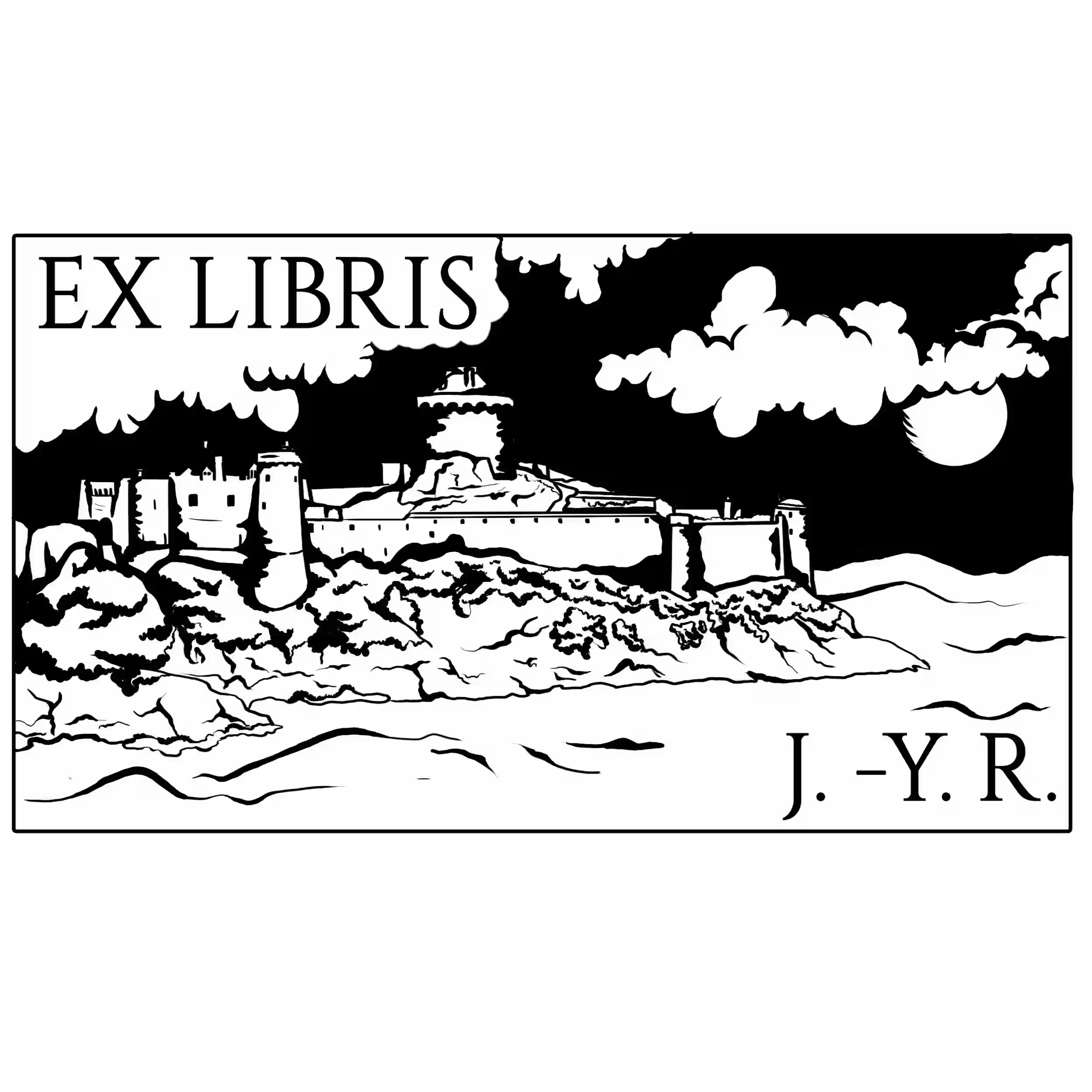
A lighthouse overlooking the sea.
A mountain trail.
A tiny cottage hidden among trees.
Places carry memories in a way very few objects can.
You don't have to explain them.
You simply recognize them.
That's often what makes these illustrations feel so personal.
Even someone seeing the bookplate for the first time can sense that the landscape matters.
The story doesn't need to be told in words.
Personal Meaning Will Always Matter More
After looking through hundreds of historical bookplates, you'll start noticing the same symbols appearing again and again.
Owls. Books. Trees. Birds.
Heraldic animals. Decorative branches.
It's tempting to assume those are somehow the "correct" choices.
I don't think they are. They're simply familiar.
The strongest bookplates I've worked on haven't been memorable because they followed tradition.
They've been memorable because they belonged completely to one person.
That's something no list of symbolic meanings can ever replace.
Tradition can inspire you. It shouldn't define you.
Combining Symbols Without Overcrowding the Design
One question I hear surprisingly often is,
"How many symbols should I include?"
Usually, fewer than you think.
When every favorite hobby, animal, flower, and meaningful place ends up in the same illustration, nothing has room to breathe.
A bookplate isn't a family scrapbook.
It's a small piece of artwork.
The strongest designs usually focus on one central idea, supported by one or two smaller details.
An owl sitting beneath an oak tree.
A cat sleeping beside an open book.
A lighthouse framed by wildflowers.
Simple compositions leave room for the imagination.
Ironically, they often tell a stronger story than illustrations packed with dozens of unrelated elements.
Sometimes removing a symbol makes the others far more meaningful.
Looking for Inspiration? Start With Your Story
If you're trying to decide what belongs on your own bookplate, don't begin by searching for symbols.
Start by thinking about yourself.
Ask questions like:
- Which books do I return to again and again?
- Where do I feel most at peace?
- What objects have quietly followed me through life?
- Which memories would I never want to lose?
- What makes my library feel like mine?
Those answers are much more valuable than a list of traditional meanings.
The symbols can come later.
Once you have a few ideas, How to Choose Symbols for Your Bookplate can help you turn them into a focused bookplate design.
There Are No Wrong Choices
One of the nicest things about creating a custom bookplate is that nobody gets to tell you what's "correct."
If a raven reminds you of your favorite novel, that's enough.
If lavender makes you think of your grandmother's garden, that's enough.
If a tiny sailboat reminds you of summers by the coast, that's enough too.
A bookplate isn't an exam in symbolism.
It's a reflection of the person who places it inside a book.
That's why two people can choose the same flower or the same animal and end up with completely different illustrations.
The meaning always comes from the person first.
The symbol simply helps tell the story.
When Tradition Meets Personal Meaning
I love looking through historical Ex Libris collections.
Some are hundreds of years old.
Many include symbols that still appear in bookplates today.
Owls. Trees. Books. Coats of arms.
Decorative botanical borders.
It's fascinating to see how those traditions continue to inspire modern illustration.
At the same time, I don't think we're limited by them.
Today's bookplates can include places, hobbies, pets, professions, favorite stories, or memories that would never have appeared in a traditional heraldic design.
That balance is what I enjoy most.
Respecting the history of bookplates while creating something that feels completely personal.
Every Symbol Tells a Different Story
If there's one thing I'd hope people take away from this guide, it's this:
Don't choose a symbol because someone else says it represents wisdom, courage, or creativity.
Choose it because it reminds you of something worth remembering.
The strongest bookplates don't tell the world who you should be.
They quietly remind you who you already are.
That's what gives them meaning every time you open a favorite book.
Frequently Asked Questions
What are the most common bookplate symbols?
Owls, cats, bees, trees, flowers, books, botanical borders, and heraldic elements are among the most common symbols found in both traditional and modern bookplates.
Do bookplate symbols have fixed meanings?
Not necessarily. Many symbols have traditional associations, but personal meaning is often far more important. The same symbol can represent completely different memories for different people.
Why are animals so popular in bookplate design?
Animals create an immediate emotional connection and help establish the atmosphere of an illustration. They're expressive, memorable, and work beautifully in a wide range of artistic styles.
How do I choose symbols for my own bookplate?
Start with your own life rather than a list of symbolic meanings. Think about places, memories, favorite books, hobbies, pets, or objects that genuinely matter to you. Those ideas usually lead to the most personal illustrations.
Can I combine several different symbols?
Absolutely, but it's usually better to keep the composition focused. One central idea supported by a few meaningful details often creates a stronger bookplate than trying to include everything at once.
What do bookplate symbols mean?
Bookplate symbols can represent traditional ideas such as wisdom, nature, knowledge, family, or courage, but their meaning is often personal. The same symbol can represent completely different memories or experiences for different people.
What does a book symbol mean?
A book symbol can represent reading, knowledge, imagination, learning, or a personal connection to literature. Its meaning ultimately depends on the person using it in their bookplate.
Do Ex Libris symbols have fixed meanings?
Not necessarily. Many symbols have traditional associations, but there is no universal rule that says a particular symbol must mean one specific thing. In a personalized Ex Libris, personal meaning is often more important than traditional symbolism.
Related Articles
- Bookplate Examples Explore different artistic styles and discover what inspires you.
- Custom Bookplates Learn how personal symbols become original illustrations.
- Custom Bookplate Gift Ideas See how meaningful symbols make unforgettable gifts for book lovers.
If you're already collecting ideas for your own bookplate, I'd love to help turn them into an illustration that feels genuinely yours. Learn more about my Custom Ex Libris Bookplate Illustration service.