

Bookplate Symbols and Their Meanings
What should you put on a bookplate? This is where most people get stuck.
You want something personal. Something meaningful. But turning "who you are" into a small illustration takes thinking. You need to understand what different symbols communicate.
This guide walks through classic bookplate ideas, what they mean, and how to choose imagery that represents you. Think of it as your personal ex libris generator. Not a template. A thinking tool.
By the end, you'll have design ideas you can sketch yourself or bring to an illustrator.
Why Bookplate Symbols Matter
An ex libris bookplate is small. Usually around 3×4 inches. You don't have room for a whole scene. You need symbols that say a lot with a little.
Historically, bookplate symbols worked like visual shorthand. Owls meant wisdom. Lions meant courage. A book and quill pointed to scholarship. Families used coats of arms. Scholars used university crests.
Today, most people aren't using family crests. But the principle still works. Pick symbols that mean something to you. When someone opens your book and sees your ex libris, those symbols tell a story.
The trick is choosing imagery that feels personal but reads clearly. Too obscure and it looks random. Too generic and it could belong to anyone. Understanding bookplate symbols and their meanings helps you find that balance.
Animals in Ex Libris Design: Meanings and Symbolism
Animals are the most popular motif in bookplate design. They're instantly recognizable. They carry built-in meaning. And they let personality come through in ways abstract shapes can't.
Here's what different animals traditionally represent. Use this as a starting point. Your cat might mean something completely different to you than "independence." Personal meaning beats dictionary meaning every time.
Owl

The owl is the classic bookplate animal. Athena's companion. The bird that sees in the dark.
Owls represent wisdom, knowledge, and night. Perfect for readers, scholars, and anyone who does their best thinking after midnight. If you're the person with a reading lamp on at 2am, an owl makes sense.
Owls also carry a slight mystery. They're not warm and fuzzy. They're watchful. Quiet. That appeals to introverts and observers.
Cat
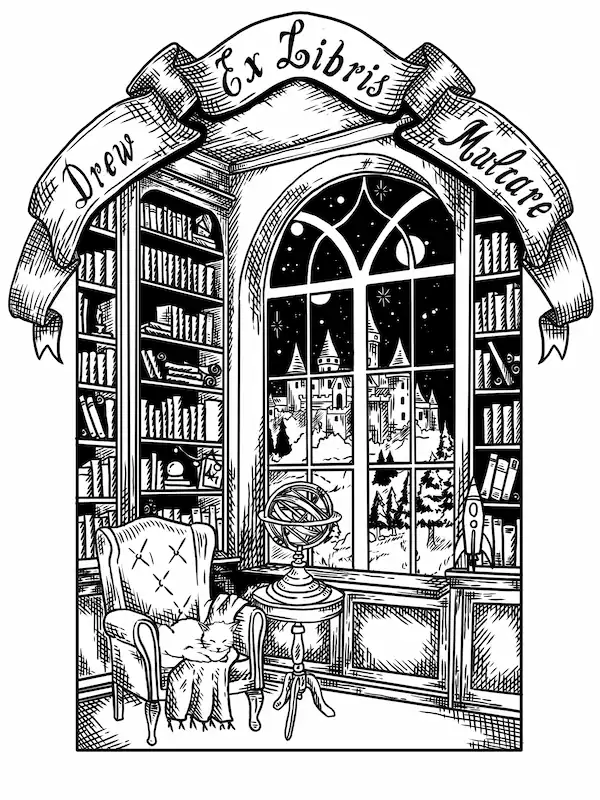
Cats represent independence, curiosity, and quiet companionship. A cat on your bookplate says you value solitude without loneliness. You like your own company.
Cats also connect to literature. Writers love cats. There's a long history of famous authors and their cats. If your books are friends you curl up with, a cat captures that feeling.
Wolf

Wolves represent loyalty, instinct, and the wild. Not domesticated. Not entirely tame. A wolf bookplate suits someone who values authenticity over politeness.
Wolves also mean pack loyalty. If family or close friendships define you, a wolf can represent that fierce connection.
Dog
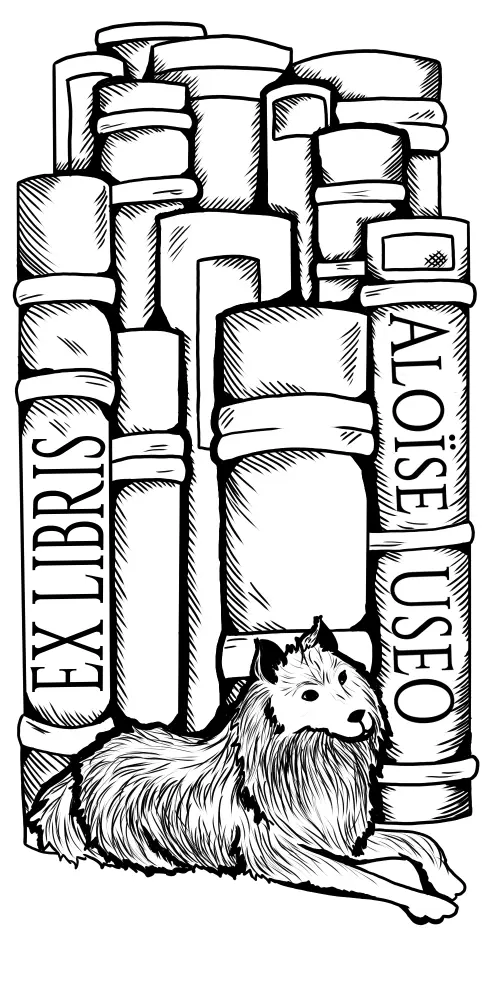
Dogs represent loyalty, faithfulness, and honest companionship. Where cats are aloof, dogs are present. A dog bookplate says you value relationships and straightforward connection.
If your library is full of books given to you by people you love, a dog fits. It's warm. Unpretentious. Welcoming.
Bee
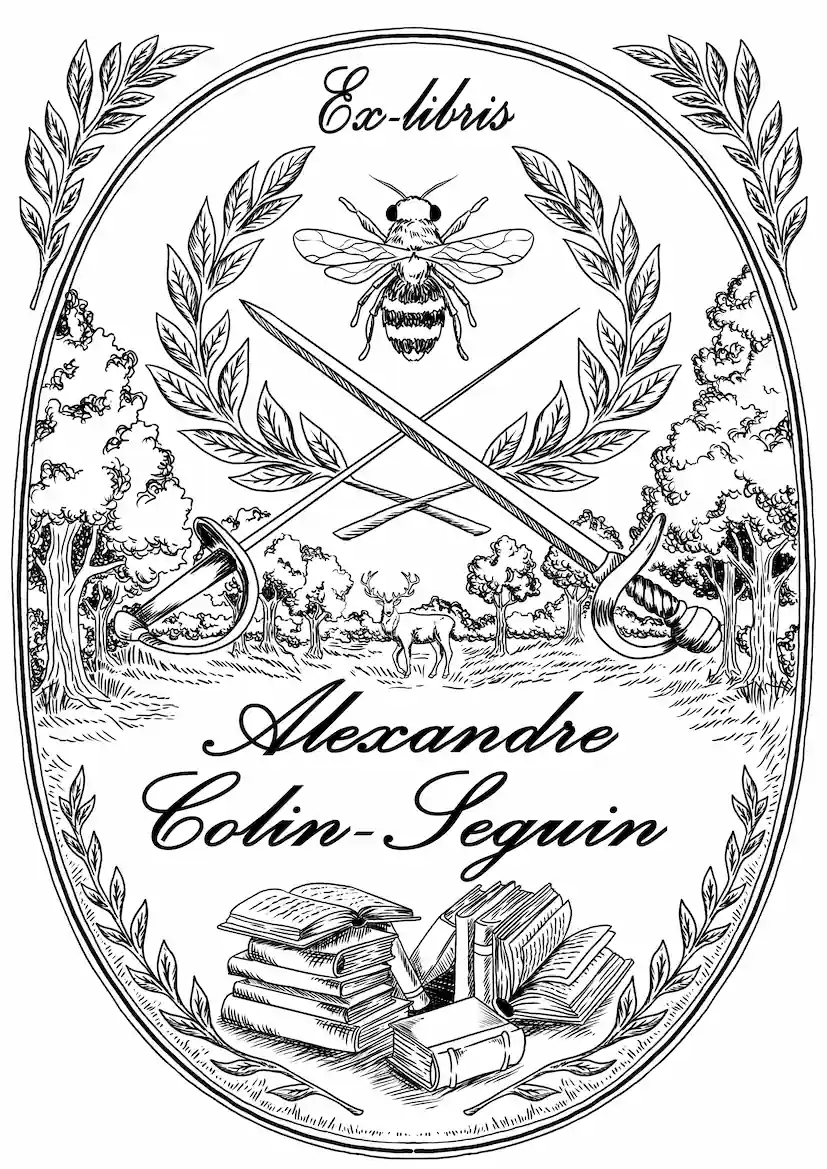
Bees represent industry, community, and sweetness earned through work. A bee bookplate suits someone who values productivity. Someone who builds things. Someone whose reading feeds into making.
Bees also represent the collective. If your reading connects you to a community of other readers or professionals, bees capture that.
Sheep
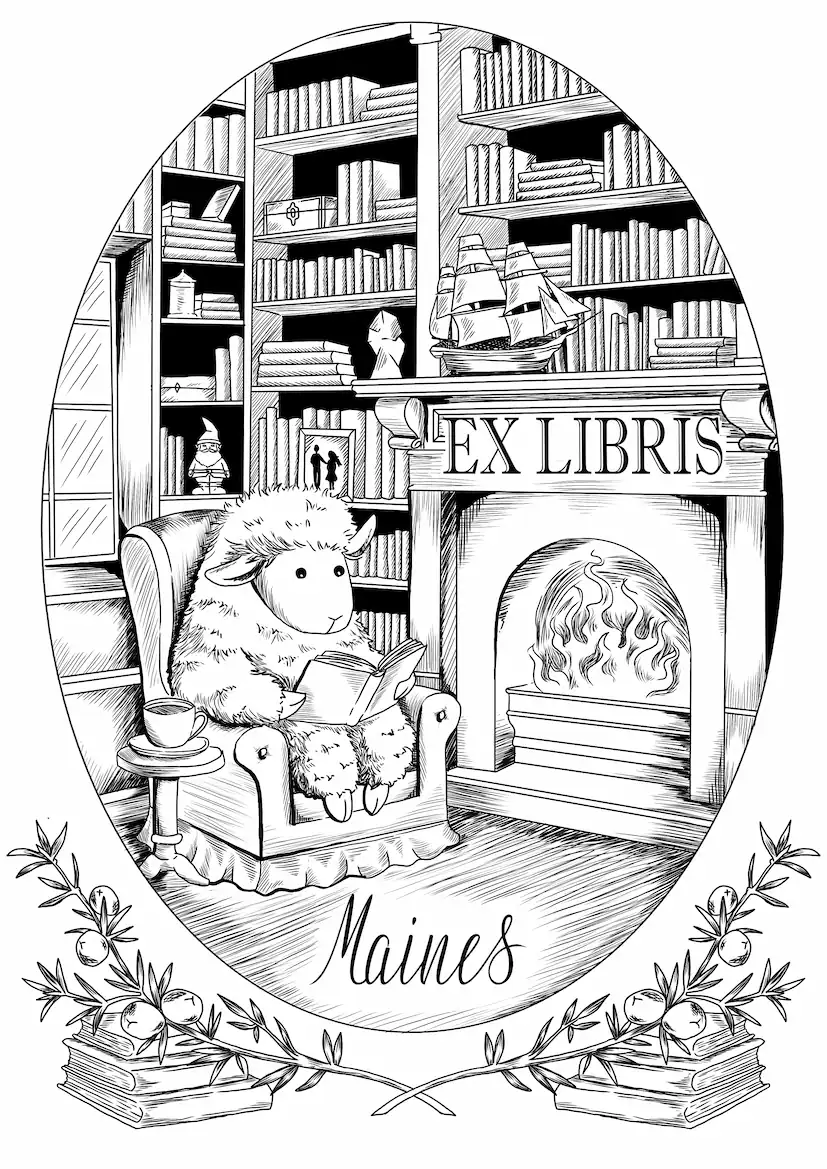
Sheep get unfairly dismissed. In bookplate tradition, they represent pastoral peace, gentleness, and a contemplative life.
If your ideal day is a book, a field, and silence, sheep belong on your bookplate. They're humble. They don't demand attention. They're content.
Frog
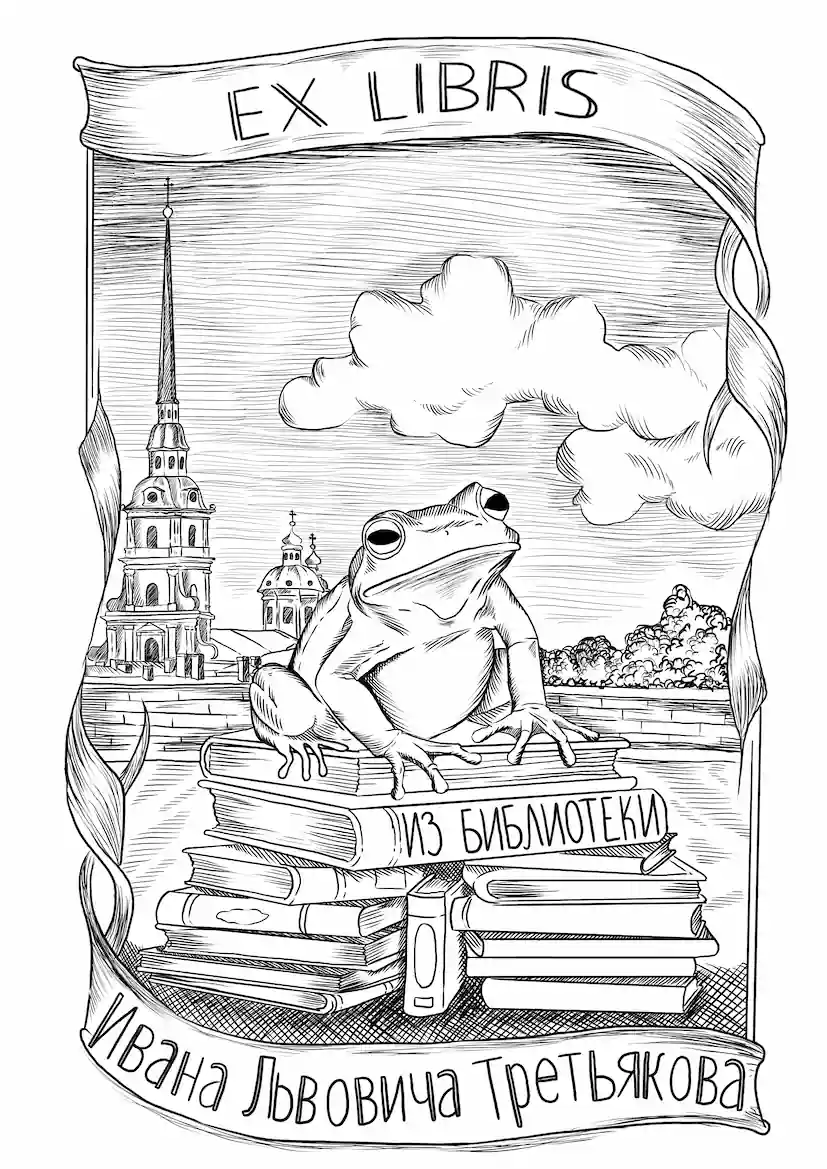
Frogs represent transformation, adaptability, and the in-between. They live in two worlds. Water and land. That makes them perfect for readers who feel between categories. Scholars who are also artists. Scientists who write poetry.
Frogs also carry a fairy tale quality. The frog prince. Unexpected transformation. If you believe in growth and change, frogs symbolize that.
Other Animals to Consider
These aren't the only options. Ravens suggest mystery and literature. Foxes suggest cleverness. Deer suggest gentleness and alertness. Lions suggest courage and nobility. Bears suggest strength and solitude.
Pick an animal that feels like you when you're reading. Not who you want to be. Who you actually are with a book in your hands.
Botanical Elements and Natural Imagery
Plants and natural elements add texture and meaning to a bookplate. They can frame an animal, surround your name, or stand alone as the main motif.
Trees

Trees are powerful ex libris symbols. They represent knowledge, growth, and roots. The tree of life. The family tree. The tree of knowledge.
Different trees carry different tones.
Oak trees suggest strength, endurance, and tradition. They're ancient. They survive storms. An oak bookplate says your library is built to last.
Willow trees suggest grace, flexibility, and reflection. They bend without breaking. A willow suits readers drawn to poetry and emotion.
Olive trees suggest peace, wisdom, and classical learning. Connected to ancient Greece and Rome. An olive bookplate suits readers of history and philosophy.
A single tree creates focus. A forest suggests getting lost in books. Roots visible below ground show interest in origins and foundation.
Flowers and Their Language
Flowers have carried symbolic meaning for centuries.
Roses suggest love, passion, and beauty. Red for romance. White for purity. A rose border is classic but never generic if the style is right.
Lilies suggest elegance and renewal. Often used in memorial bookplates. Libraries dedicated to someone's memory.
Sunflowers suggest optimism and warmth. They turn toward light. Good for someone cheerful and open.
Lavender suggests calm and devotion. Gentle. A lavender sprig adds softness to any design.
Pick flowers that grow where you live. Flowers from your wedding. Flowers your grandmother grew. Personal connection matters more than universal symbolism.
Wreaths and Borders
Botanical wreaths frame your name and central image. They've been used in ex libris design for centuries.
Laurel wreaths suggest victory and achievement. Borrowed from ancient Rome. Apollo. Athletes. Scholars.
Olive branches suggest peace. A humble alternative to laurel.
Simple vine borders suggest growth and continuity. Decorative without demanding attention.
Mixed floral borders can include multiple meaningful plants. Birth flowers. Anniversary flowers. Plants from a meaningful place.
Literary Symbols and Scholarly Motifs
Some bookplate designs reference literature, mythology, or scholarship directly. This works when the reference is clear but not cliche.
Books and Reading Imagery
An open book seems obvious for a bookplate. But it works if done well. A stack of books with favorite titles on the spines. A book being read by an animal. An open book with a meaningful quote.
Quills and inkwells represent writing. They suit authors and people who annotate heavily. If you write in your books as much as you read them, a quill fits.
Candles suggest reading by low light. Late nights with a book. The romantic, focused feeling of a single light source.
Mythological Figures
Greek and Roman mythology offers endless options. Athena with her owl. Apollo with his lyre. Hermes with his winged sandals.
These work when they connect to your interests. A classicist might use Athena. A musician might use Apollo. A traveler might use Hermes.
Be careful with overused symbols. Generic Greek key patterns appear everywhere. If you use mythology, make it specific to your story.
Celestial Motifs
Stars, moons, and suns appear often in bookplate design. They suggest the cosmic, the eternal, and night reading.
A crescent moon suits night owls and dreamers. Romantic without being sentimental.
A full sun suggests warmth, clarity, and reason. More Enlightenment than Romantic.
Constellations can be personal. Your zodiac sign. A constellation visible from where you grew up. Stars from a night that mattered.
Personal Iconography: Making It Yours
The best ex libris designs combine traditional symbols with personal meaning. Here's how to find imagery that's uniquely yours.
Your Profession or Calling
What do you do? What tools define your work?
A doctor might use a caduceus. A carpenter might use tools. A chef might use a knife and herb sprig. A musician might use their instrument.
Think about what you use every day. What objects define how you spend your time.
Your Hobbies
What do you do when you're not reading? Sometimes those interests reveal more than your job.
A gardener might add specific plants. A sailor might add an anchor or compass. A chess player might add a knight. A cyclist might add a wheel.
Hobbies often connect to reading tastes. A gardener probably owns gardening books. That connection makes the symbol more meaningful.
Places That Shaped You
Geography can be powerful. Mountains if you grew up near them. Ocean waves if the coast is home. City skylines if you're urban to your core.
Maps work well in ex libris design. A small map of your hometown. The outline of a country. Coordinates of a meaningful place.
Family and Heritage
Traditional bookplates used family crests. Most people don't have official coats of arms. But you can create personal versions.
Symbols from your ethnic heritage. Patterns from traditional textiles. Animals connected to your ancestry.
Family can appear through simpler choices too. Your grandmother's favorite flower. A tree from your childhood yard. A pet your family always had.
Bookplate Design Tips: Composition and Layout
A bookplate is small. Complex scenes don't work. Simple compositions with clear focal points read best.
Border vs. Vignette
Two main approaches exist.
A bordered design uses a frame. Your name at the bottom. Illustration above. Decorative border around it all. This is the classic ex libris layout.
A vignette has no border. The illustration fades at edges. Your name integrates into the image. This feels more modern and fluid.
Neither is better. Borders suit formal, traditional styles. Vignettes suit organic, illustrative styles.
Where Your Name Goes
"Ex Libris" traditionally appears at top or bottom. Your name goes below it. But variations exist.
Some designs put the name in a banner held by an animal. Some place it on a book spine. Some curve it along a path. Some skip "Ex Libris" and use only the name.
Make sure the name stays legible at small sizes. Decorative fonts work, but not at the expense of readability.
Keep It Simple
Leave room to breathe. Crowded bookplates look busy and print poorly. The best designs have clear focal points surrounded by space.
This matters especially for rubber stamps or embossers. These production methods need clean lines and defined shapes. Intricate details get lost.
How to Choose the Right Imagery
Before you create your own bookplate or work with an artist, think through these questions:
- What animal represents how you feel when reading?
- What plants or natural elements connect to your life?
- What literary or cultural references matter to you?
- What symbols from your work, hobbies, or heritage could fit?
- What places have shaped who you are?
- What mood do you want? Warm? Mysterious? Classical? Playful?
- Do you prefer a traditional bordered layout or a flowing vignette?
Write down your answers. You don't need to use everything. But having options gives you material to work with.
If you're working with an illustrator, these answers become your creative brief. They give an artist the information needed to translate your ideas into a design that feels like you.
Thinking of giving a bookplate as a gift? The same questions apply. Answer them about the recipient.
Frequently Asked Questions
What does ex libris mean?
Ex libris is Latin for "from the books of." It's the traditional phrase printed on bookplates before the owner's name.
What symbols are commonly used on bookplates?
The most common bookplate symbols include owls (wisdom), trees (knowledge and growth), botanical wreaths, open books, quills, family crests, and animals that represent the owner's personality.
Where do you place a bookplate in a book?
Traditionally, bookplates go on the inside front cover or the first blank page (front endpaper). Some collectors place them on the title page.
Can I use a family crest on my bookplate?
Yes. If your family has a coat of arms, it makes a meaningful bookplate. If not, you can create personal heraldry using symbols meaningful to your heritage.
What art styles work best for bookplate design?
Popular styles include woodcut, linocut, Art Nouveau, Art Deco, Victorian, and modern minimalist. The best style depends on your personal taste and how you'll produce the bookplate.
From Ideas to Illustration
A bookplate is a small thing that says a lot. The symbols you choose tell your story in visual shorthand. An owl says wisdom. A cat says independence. A tree says growth. Combine them with personal meaning and you have something no one else has.
The challenge is turning ideas into illustration. Rough concepts into refined design. Personal meaning into visual clarity.
If you'd like help bringing your vision to life, explore custom ex libris bookplate illustration. Every design is hand-drawn, original, and made to work as stamps, embossers, or prints.