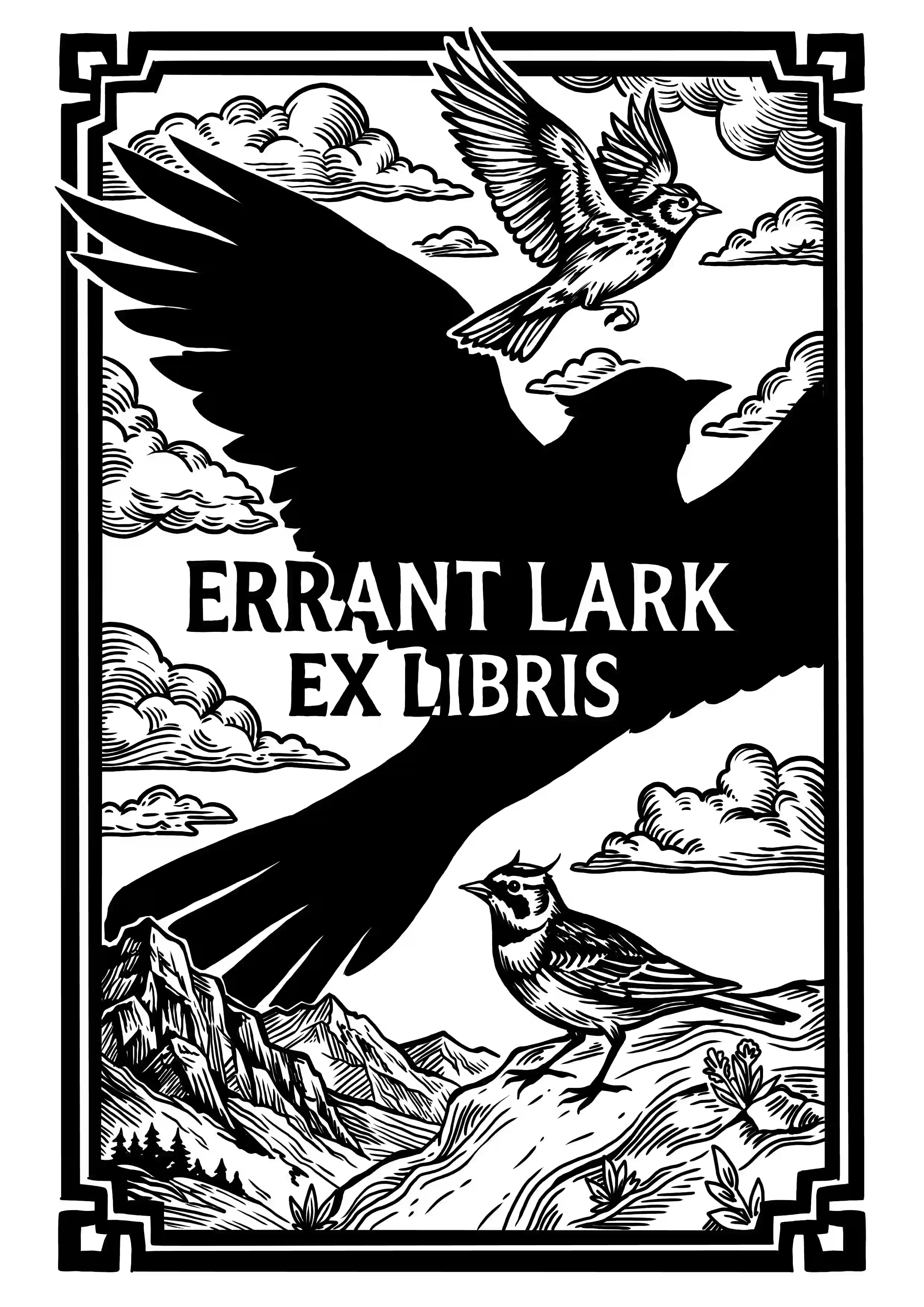
Narrative Illustration vs Decorative Artwork

Narrative Illustration vs Decorative Artwork
A lot of artwork inside books looks beautiful for a few seconds and then disappears from memory.
Narrative illustration works differently.
It pulls readers deeper into the story.
The image is not just there to decorate the page.
It creates emotion, tension, atmosphere, and movement inside the scene itself.
That difference may seem small at first, but it completely changes how illustrated stories feel while reading them.
Decorative Artwork Looks Good. Narrative Illustration Tells Something.
Decorative artwork usually focuses on appearance first.
It may be:
- visually detailed
- technically impressive
- aesthetically pleasing
But narrative illustration has a different purpose.
Its job is to support storytelling.
That means the artwork helps communicate:
- emotion
- movement
- tension
- atmosphere
- pacing
- character relationships
The illustration becomes part of the story itself instead of existing beside it.
Readers Feel Storytelling Before They Analyze Artwork
Most readers do not consciously study composition while reading.
But they still feel it.
A character positioned alone in a large empty space feels different from a crowded scene.
Sharp shadows create tension.
Soft shapes create calmness.
These visual decisions quietly affect how readers emotionally experience a story.
That is one reason strong narrative illustration often feels immersive even when the artwork itself looks simple.
Narrative Illustration Creates Emotional Direction
Good storytelling artwork guides attention naturally.
Readers immediately understand:
- where to look
- what matters emotionally
- what the mood of the scene is
That emotional direction helps scenes feel alive.
Without it, illustrations can feel disconnected from the actual emotional movement of the story.
The artwork supports emotional rhythm instead of interrupting it.
Atmosphere Matters More Than Perfect Technique
Technically perfect artwork can still feel emotionally empty.
Readers usually connect more strongly to atmosphere than perfection.
A slightly rough illustration with strong emotion often feels more memorable than a polished image with no emotional direction behind it.
That atmosphere can come from:
- lighting
- composition
- texture
- body language
- contrast
- environmental details
These things shape how readers feel inside the story world.
Narrative Illustration Creates Continuity
One of the biggest strengths of narrative illustration is consistency.
The visual language continues across scenes:
- expressions
- mood
- pacing
- composition style
- environmental storytelling
That continuity helps readers stay emotionally connected while moving through the book.
This becomes especially important in stories that use chapter illustrations to shape pacing and immersion between scenes.
Storytelling Artwork Feels More Memorable
People rarely remember isolated decorative images for long.
They remember moments connected to emotion.
A character standing alone in the rain.
A tense hallway before something important happens.
A quiet expression during a difficult scene.
Narrative illustration strengthens those emotional memories because the artwork becomes attached to the storytelling itself.
The image gains meaning through context.
Frequently Asked Questions
What is narrative illustration?
Narrative illustration is artwork created to support storytelling. Instead of only decorating the page, the illustrations help communicate emotion, atmosphere, tension, movement, and visual direction inside the story.
What is the difference between narrative illustration and decorative artwork?
Decorative artwork focuses mainly on appearance, while narrative illustration focuses on storytelling. The goal is to deepen emotional connection and help readers feel more immersed in the scene itself.
Why does narrative illustration feel more immersive?
Narrative illustration guides attention and emotion naturally. Composition, lighting, character positioning, and atmosphere all help readers emotionally enter the story world more deeply.
Why do some illustrations feel emotionally memorable?
People usually remember images connected to emotional moments. Narrative illustration becomes memorable because the artwork supports tension, atmosphere, character emotion, and important story scenes instead of existing separately from them.
Strong Illustration Changes How a Story Feels
People rarely remember every sentence from a book.
They remember moments.
A certain atmosphere.
A quiet expression.
A feeling connected to a scene.
That is what narrative illustration helps create.
The artwork becomes part of the emotional experience itself instead of sitting beside the story as decoration.
And when illustrations support the emotional movement of a story properly, readers feel more connected to the world they are stepping into.
If you are exploring custom storytelling artwork or illustrated scenes for a book project, you can find more information on the book illustration service page.